After-hours activity monitoring with existing cameras
Plan after-hours activity monitoring with an existing camera, schedule exceptions and a reviewer, without inferring theft or intent from a short event context.
- Author
- aiNOW სარედაქციო გუნდი
- Read time
- 8 min
- Published
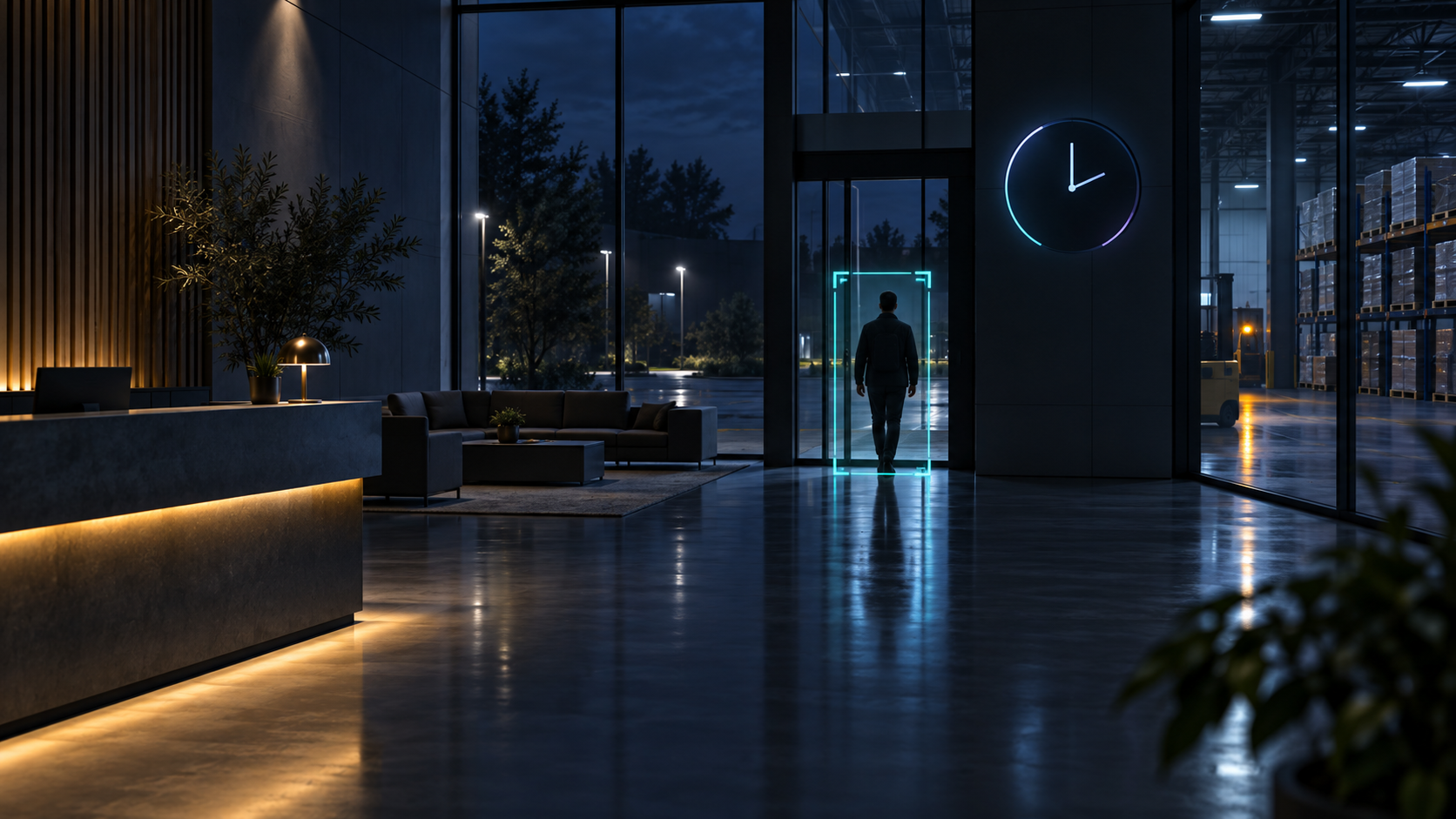
TL;DR: After-hours monitoring starts with a calendar, a visible area and a responsible reviewer. An event signal can organize a check when activity appears outside the agreed schedule, but it cannot prove theft, intent or an incident by itself. Discuss one time-based scene.
The time rule
Define which hours and which area matter. A retail store, warehouse, office and parking entrance can have different schedules, exceptions and responsible teams. The event should reference the schedule that the operation actually uses, not a generic “closed” label.
The camera scene after hours
Check lighting, reflections, camera mode, motion and any cleaning or delivery activity that occurs outside ordinary hours. A door opening during a delivery may be expected, while the same movement during a different schedule may need review. Write the exception before the signal is tested.
Axis describes analytics for scene insight and action in its own solutions. NVIDIA Smart Video Record documents event-based recording patterns. Neither source establishes an aiVISION workflow or an incident result.
Comparison: continuous recording and time-based review
Continuous recording preserves the stream for later investigation. A time-based review rule creates a prompt when activity appears in a period the team has marked for attention. Recording gives context, while the rule gives a reviewer a defined moment and a response path.
| Decision | Continuous archive | Time-based signal |
|---|---|---|
| Search | Starts after a concern is known | Creates a prompt under a schedule |
| Context | Depends on later review | Can include a camera and short event context |
| Limits | Does not explain intent | Does not replace access or safety procedures |
Exceptions and ownership
List deliveries, cleaning, maintenance, security rounds and emergency access. Name who can change the schedule and who reviews a signal when an exception is active. Without this record, a correct event can become noise or a planned action can look unusual.
The schedule should be tied to a location and a responsible team rather than to a generic label such as closed. A warehouse loading window, a retail closing routine and an office maintenance visit can all create activity that is expected for that site. Record whether the reviewer sees a short context clip, a frame or a link to the archive, and state what happens when that context is unavailable.
Keep the schedule change history with the event rule. A property manager can alter access hours, a cleaner can move through a corridor and a camera owner can change the angle. Each change can turn a normal movement into an unclear signal. A custom monthly service can configure the handoff after the existing cameras, schedule source and review responsibility are assessed.
ONVIF Profile T provides a reference for advanced streaming and imaging capabilities in conformant devices and clients. It can inform a compatibility question, but it does not prove that a specific after-hours scene or schedule will behave correctly.
The after-hours test
- Write the schedule and exception list.
- Choose the camera and visible area.
- Record ordinary empty scenes and expected activity.
- Test the event with the responsible reviewer.
- Record unclear, rejected and escalated cases.
Limits of after-hours activity monitoring
The camera cannot prove that activity is criminal, intentional or unauthorized. It may miss an event when the view is dark, blocked or unavailable. The workflow does not replace keys, access logs, staff procedures or a human decision.
NIST's AI RMF supports documented responsibilities and monitoring. It is not a security certification or legal conclusion.
The schedule handoff record
- Area, camera and schedule owner.
- Working hours and approved exceptions.
- Reviewer and escalation route.
- Scene and notification test result.
Related reading
მასალა მომზადებულია AI-ის დახმარებით და გადამოწმებულია სარედაქციო ეტაპზე.
The first schedule test should produce a handoff record rather than a claim about security outcomes. Name the camera, area, applicable hours, exceptions, reviewer and action path. Keep examples of expected movement beside unclear cases so the team can see why a signal was accepted, rejected or left unresolved.
After-hours workflows depend on the real lighting, access routine and network path. An existing camera may be a suitable starting point, but the project still needs to assess its view, stream and context delivery. A custom monthly service can configure the rule and review route after those conditions are understood, including an on-premises option only when site compute is sufficient.
If a property changes its schedule, entrance or camera angle, repeat the relevant scene test. A previously useful time rule can become ambiguous when a delivery route changes. Keep the revision owner visible and pause expansion when the team cannot explain the event context.