Forklift and pedestrian proximity alerts: designing a safe review process
Define a forklift and pedestrian proximity event from an existing camera, then route its context to a human reviewer without claiming incident prevention.
- Author
- aiNOW სარედაქციო გუნდი
- Read time
- 8 min
- Published
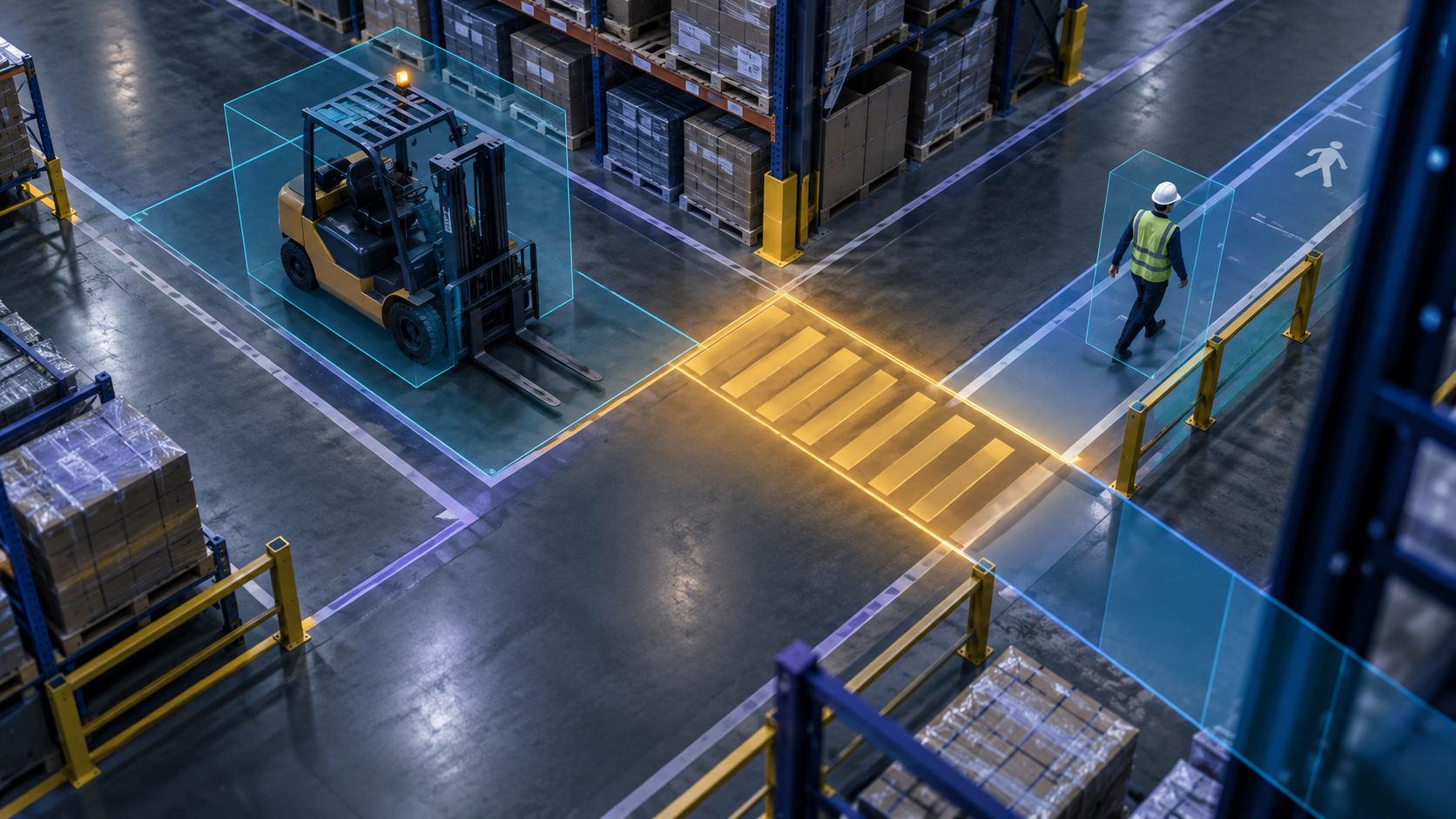
TL;DR: A forklift and pedestrian proximity workflow should define one visible area, one event condition and one human reviewer. Video can prompt a timely check, but it cannot prove intent, prevent an incident or replace site safety responsibility. Discuss one warehouse scenario after the scene and response rule are written.
The proximity event
A proximity event is a visible condition that the site wants a person to review. The team might define a marked lane, a loading area or a crossing point where a person and moving equipment appear close in the same view. The rule must describe the area, the time condition and the action that follows a reviewed signal.
Write the event in operational language. “Person near moving equipment in the marked loading lane” gives the reviewer a place and a reason to look. “Detect unsafe behavior” leaves the camera and the reviewer with no shared boundary.
The camera scene and its limits
Choose a view that shows the approach, the lane boundary and enough context to distinguish ordinary movement from the event under review. Note obstructions, lighting, camera angle, vehicle speed and paths that overlap. A camera that sees a forklift but hides the pedestrian route cannot answer the same question as a view that shows both.
Axis describes scene analytics as a way to derive actionable insight in its own product portfolio. That is useful industry context. It does not prove that a custom aiVISION workflow can identify a particular proximity event on an untested site.
Comparison: occasional observation and an agreed alert
Occasional observation depends on a supervisor seeing the right area at the right moment. An agreed video alert creates a repeatable prompt for review when the visible condition is present. The alert does not decide the safety response. It gives the responsible person a defined piece of context to check.
| Decision area | Occasional observation | Agreed event workflow |
|---|---|---|
| Coverage | Depends on when a person looks | Uses a written camera and zone rule |
| Context | May rely on memory | Can include time, camera and clip context |
| Responsibility | Often remains implicit | Names reviewer and follow-up record |
A review workflow for the site
- Mark one lane or crossing and name the camera that shows it.
- Describe the visible event and similar movement that should not trigger a review.
- Test the scene under the relevant light and traffic conditions.
- Send the signal to the responsible reviewer with a short context.
- Record confirmed, rejected and unresolved cases.
NVIDIA DeepStream documents streaming analytics pipelines, including camera and RTSP inputs. That is a technical reference, not an aiVISION architecture claim. The project still needs its own camera and response test.
The review record should preserve the frame or short clip that caused attention, the camera name and the time condition. A reviewer can then explain whether the person and equipment were both visible, whether the boundary was clear and whether the scene was ordinary traffic. If the clip does not answer those questions, mark it unresolved instead of turning an ambiguous frame into a safety conclusion.
For a warehouse, logistics site or manufacturing floor, ownership matters as much as the event rule. Name the safety lead, shift owner and person who can change a zone or schedule. A custom monthly service can configure these handoffs after the existing cameras, network path and review procedure are assessed. The service remains a project arrangement, not a universal safety control.
Limits of a proximity signal
A frame cannot prove that a person intended to enter a danger area, that a driver saw the person or that an incident was prevented. It can also miss a person behind an obstruction or treat two nearby objects as a single visual condition. Human review, training and the site's safety process remain necessary.
NIST's AI RMF describes governance, measurement, management and clear responsibilities for AI risk work. It is a governance reference, not workplace safety advice or certification.
The first acceptance record
- Camera and lane are named.
- Event and excluded lookalikes are written.
- Reviewer and escalation path are assigned.
- Test scenes and unresolved cases are retained.
- Expansion waits for a decision based on the record.
Related reading
მასალა მომზადებულია AI-ის დახმარებით და გადამოწმებულია სარედაქციო ეტაპზე.
Keep the acceptance record separate from the safety conclusion. It should say which camera, lane and schedule were tested, which ordinary scenes were reviewed and which cases remained unresolved. A reviewer can use that record to request a narrower zone, a different view or another test condition. The record is useful even when the proposed event is paused.
For logistics and manufacturing teams, the signal should fit the existing response chain. A supervisor may need to stop a local task, call a safety lead or simply review the context after the movement is over. The camera workflow can organize that handoff, while the site remains responsible for its own training, controls and decisions. A monthly custom implementation is discussed after these requirements are understood.