Warehouse PPE video monitoring: human review guide
Plan one visible PPE rule, one camera zone and one human reviewer without claiming automated safety compliance or a customer result from footage.
- Author
- aiNOW სარედაქციო გუნდი
- Read time
- 8 min
- Published
In this note
- 01 · PPE event workflow
- 02 · Camera and zone selection
- 03 · Comparison: occasional observation and agreed signal
- 04 · PPE workflow evaluation
- 05 · Limits of PPE video review
- 06 · Warehouse PPE checklist
- 07 · Frequently asked questions
- 08 · Does PPE video monitoring prove that a worker followed a safety rule?
- 09 · Can a PPE workflow start before the camera view is tested?
- 10 · Related reading
TL;DR: A warehouse PPE workflow should define one visible equipment rule, one camera zone and one human reviewer. Video can organize a timely review, but it cannot establish intent or replace the site's safety responsibility. Discuss a warehouse scenario after the camera view and operating rule are written down.
PPE event workflow
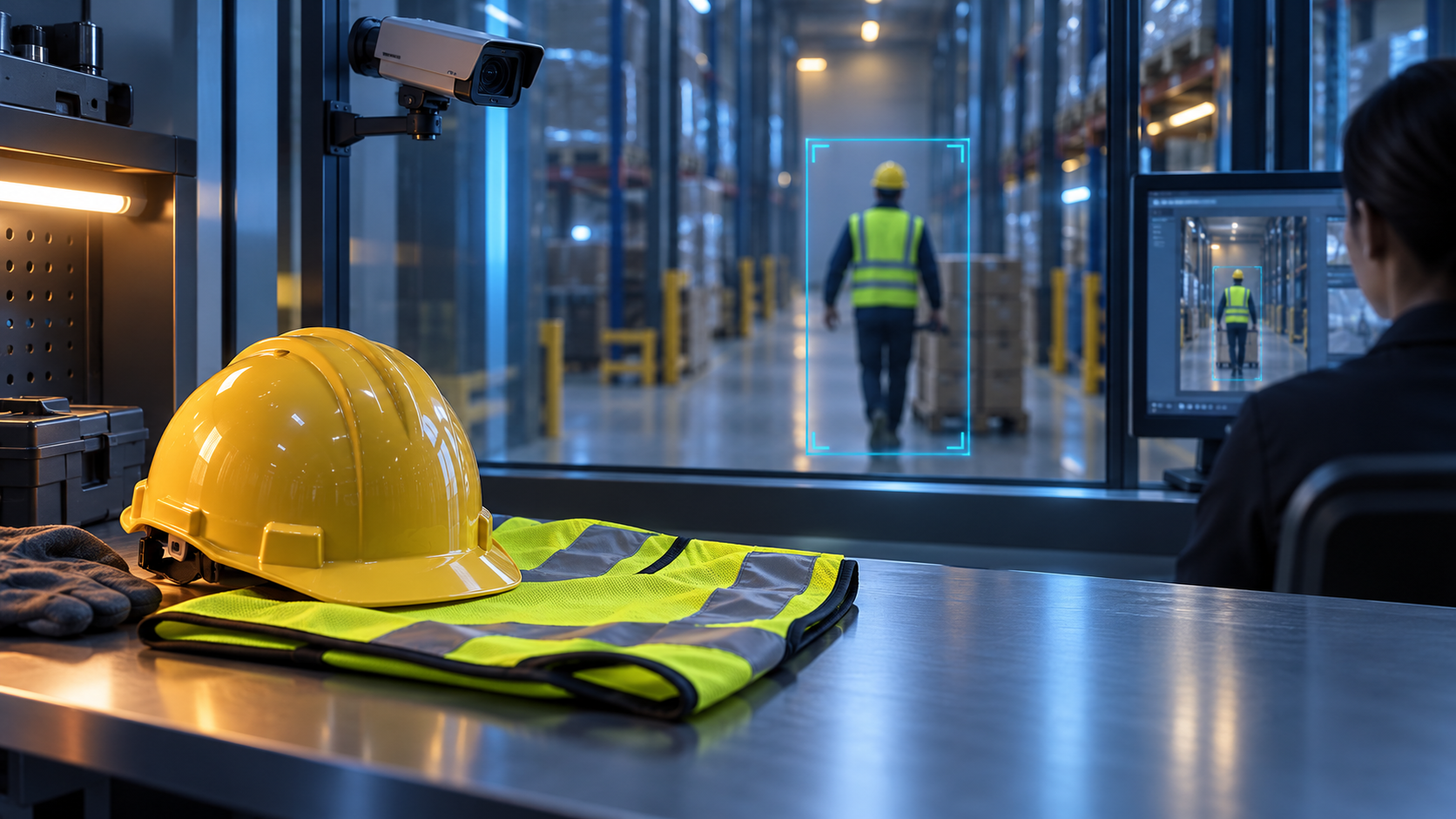
A PPE scenario can help a warehouse team notice a visible condition that deserves review, such as a missing helmet or another item the site has defined for a particular area. It does not replace the site's safety program, training, supervision or incident process. The useful product question is narrower: can a defined camera view create a signal that the responsible person can check?
Axis describes video analytics as a way to derive actionable insights from scenes in its own portfolio. NVIDIA DeepStream documents pipelines for streaming analytics and inference. These sources provide technical context. They do not prove that a custom aiVISION workflow will detect a particular PPE item on a customer's footage.
Camera and zone selection
Choose a zone where the equipment rule is visible and the normal workflow is understandable. Record the camera angle, worker approach, light, background, obstructions and the point where the rule should be checked. A loading gate and a packing line can have different visibility problems, so the same threshold should not be copied across them without a test.
Write the equipment rule with the site owner. “Helmet visible before entry into the marked area” is a testable description. “Improve safety” is an objective, not an event condition.
List the lookalikes that may confuse a review: a helmet carried in a hand, a reflective vest hanging on equipment, a person partly hidden by a pallet, or a worker outside the marked area. The list is not a promise that software will solve every case. It tells the team which scenes belong in the first test and which require a human decision.
Comparison: occasional observation and agreed signal
Occasional observation depends on when a person happens to look at a monitor or walk through the area. An agreed signal creates a repeatable review point when the visible condition is present. The signal does not create compliance by itself, and it does not remove the need for supervisors to manage the work.
| Review method | What it can provide | What remains with the team |
|---|---|---|
| Occasional observation | Context during the moments someone sees | Coverage, timing and written follow-up |
| Agreed video event | A repeatable prompt with camera context | Rule ownership, response and safety decisions |
| Human review | Contextual confirmation or rejection | Training, supervision and incident process |
PPE workflow evaluation
- Write one equipment rule, one camera zone and one responsible reviewer.
- Collect ordinary scenes and cases where the equipment is visible or unclear.
- Record the view, lighting, worker movement and similar-looking objects.
- Check whether the signal gives the reviewer enough context for a decision.
- Record accepted, rejected and unresolved cases without treating the result as a universal rate.
The record should show the limits of the scenario. If the camera cannot show the required equipment, the next step may be a scene change, a narrower rule or a decision to stop. A monthly custom implementation should keep that result visible rather than turn it into a broad promise.
Limits of PPE video review
A frame cannot prove that a worker intended to break a rule, that an item was worn correctly at every moment or that an incident was prevented. It cannot replace training, supervision, local safety procedures or qualified advice. The team must decide how a signal is reviewed and what action is appropriate.
NIST's AI RMF emphasizes governance, measurement, management and clear responsibilities. That supports an explicit human-review boundary, but it is not a safety certification or legal conclusion about a workplace.
Warehouse PPE checklist
- Defined PPE item and area.
- Camera view and representative scene conditions.
- Responsible reviewer and escalation route.
- Accepted, rejected and unresolved examples.
- Conditions that require a retest or a stop.
Frequently asked questions
Does PPE video monitoring prove that a worker followed a safety rule?
No. It can create a review signal for a visible condition. Training, supervision, the site's safety process and the final decision remain with responsible people.
Can a PPE workflow start before the camera view is tested?
It can be planned, but the workflow should not be accepted until the view, scene conditions and human review path are tested on representative footage.
Related reading
მასალა მომზადებულია AI-ის დახმარებით და გადამოწმებულია სარედაქციო ეტაპზე.
Connect the PPE rule to the work schedule and the zone owner. The same equipment can follow different rules in different areas. If a change relates to a shift, supervisor or camera angle, record who updates the rule and who checks the new scene.
Keep cases without a clear answer at the end of the test. An unresolved case is part of the next piece of work, not a reason to mark the result positive. This preserves a real place for human review.
The warehouse manager should know where the record is stored and who may change the rule. If a new PPE requirement or zone layout appears, do not treat the old test as current evidence automatically.
Link each checklist item to a specific frame and working condition. If a helmet or vest is partly hidden, the answer may remain unresolved and should be recorded separately. The next step should be a change to the view, rule or supervision, while one favorable case cannot establish general compliance.